

Logistics and fleets
A lender-backed transformation in temperature-controlled logistics
A temperature-controlled third-party logistics company in a lender-backed transformation, with much of its operation still run on paper.
System of recordIn this sample case, a driver at a regional truckload carrier with its own shop writes up a brake defect in Samsara, but the shop works in Fleetio and nobody owns the handoff, so no work order is opened and the next morning a roadside inspection puts the truck out of service. We redesign that handoff first, with an owner and a clock for every write-up, a hold rule for safety defects and one yard board each morning, then switch on Fleetio’s own Samsara import and build one agent that drafts the work order, which the lead mechanic approves and opens in Fleetio.
Chapters
At a glance
As redesigned
Every issue gets an owner, the lead mechanic on shift, and a clock, so no write-up waits on someone’s memory.
A safety defect holds the truck until a mechanic certifies the repair, and dispatch sets it out of service in McLeod.
Preventive maintenance runs on engine hours and miles, and one yard board each morning says which trucks are ready, due or held, so dispatch reads it instead of calling the shop.
As built
Product names and logos are trademarks of their respective owners.
The measure
Open safety defects older than 24 hours, counted each morning and owned by the maintenance manager. The outcome the fleet watches is its roadside vehicle out-of-service rate, from its own FMCSA inspection history.
48% of fleets don’t integrate their telematics with maintenance management software.
More work
A temperature-controlled third-party logistics company in a lender-backed transformation, with much of its operation still run on paper.
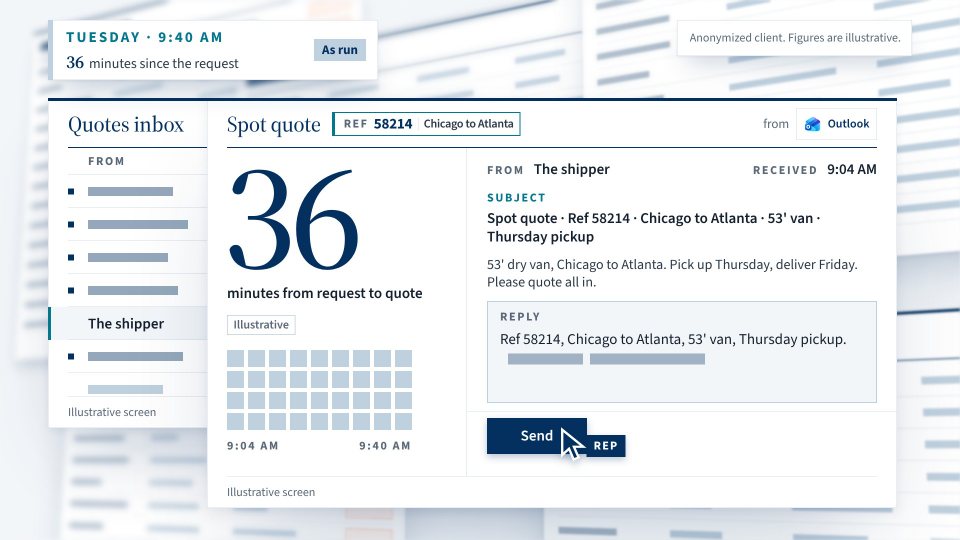
System of recordA truckload brokerage on McLeod PowerBroker, quoting spot freight by hand from a shared Outlook inbox.
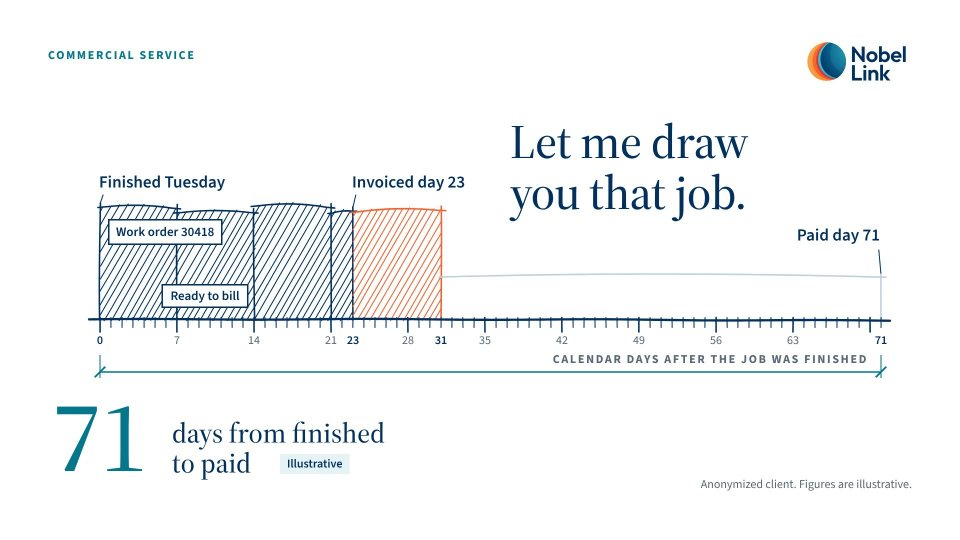
Data science and forecastingA commercial service contractor on ServiceTitan, closing jobs before they were ready to bill.
Process redesignNext step
If you run a company like this one, back one or lend to one, a principal replies within one business day and holds a first call.