



Logistics and fleetsFilm · 2 min
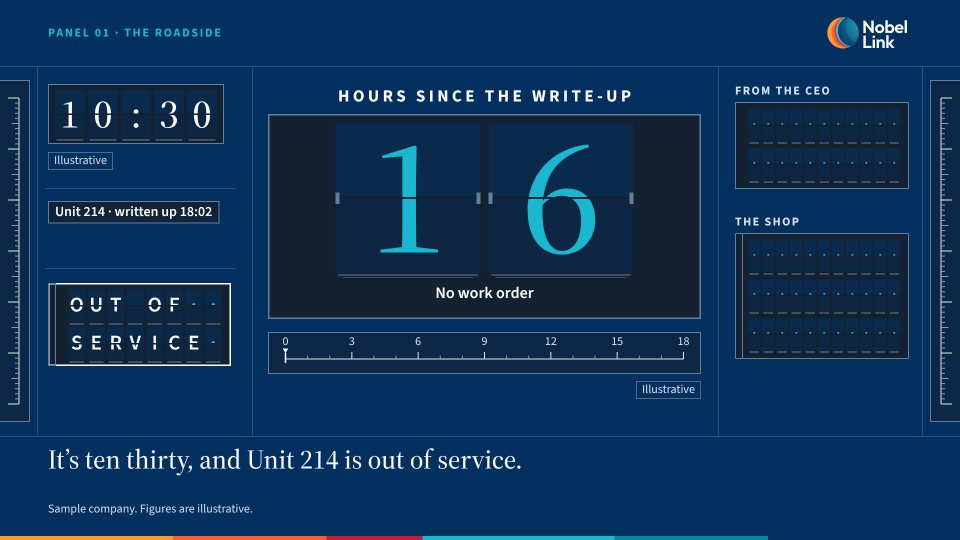
The driver wrote it up. Nobody opened a work order.
A sample regional carrier on Samsara and Fleetio, where a driver’s brake defect never reaches the shop.
Process redesignA truckload brokerage took spot requests in a shared Outlook inbox, and while its reps were on the phone covering loads, requests waited and each quote was typed by hand, so a load could go to whoever answered first and the desk kept no record of the quotes it lost. We redesigned the quote desk first, with every request sorted inside a minute, a margin band and a validity for every customer and every quote logged as won, lost or no answer, then built a rate model on the desk’s own lane history and agents that sort each request, propose a rate and draft the reply for the rep to check and send.
Chapters
At a glance
As redesigned
Every request sorted inside a minute into priceable, needs a person or a polite no, with mini-bids in their own queue.
A margin band and a validity for every customer, so every quote says how long it’s good for.
Acknowledged in five minutes and quoted in fifteen, each sent by a rep, and every quote logged as won, lost or no answer.
As built
Product names and logos are trademarks of their respective owners.
The measure
Minutes from request to quote, stopped at the rep’s send, and the share of requests quoted inside the desk’s service level. And a hit rate for every lane, because every quote has an outcome. The pricing lead reviews hit rate and margin by lane every Monday.
At one large broker, about a third of quote requests once went unanswered or were answered too late.
More work
A sample regional carrier on Samsara and Fleetio, where a driver’s brake defect never reaches the shop.
Process redesignA temperature-controlled third-party logistics company in a lender-backed transformation, with much of its operation still run on paper.
System of recordAn MRO distributor on Prophet 21, where reps overrode the system price and nobody owned the long tail.
Data science and forecastingNext step
If you run a company like this one, back one or lend to one, a principal replies within one business day and holds a first call.